
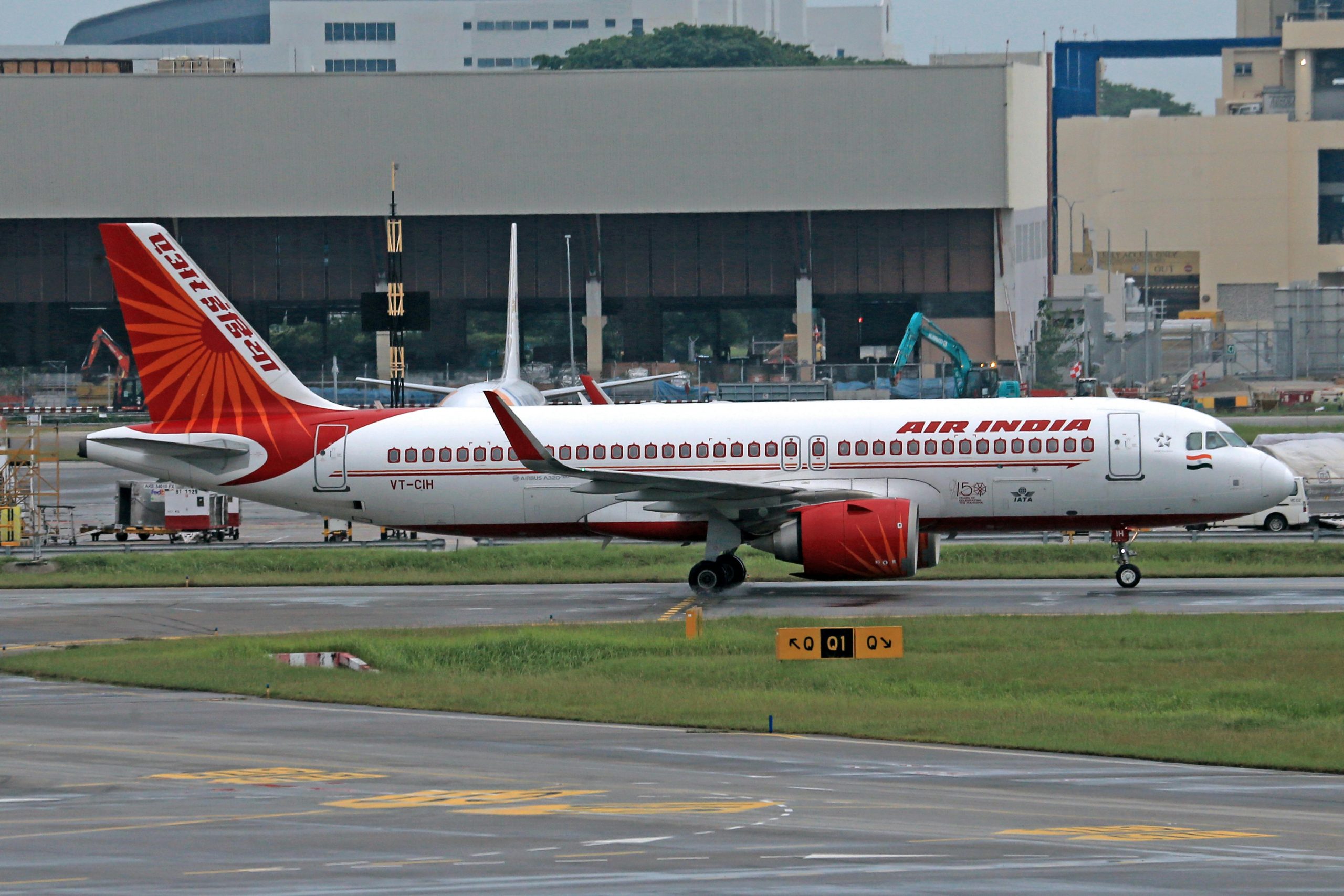
India today stands at a fascinating crossroads in aviation. Passenger numbers are rising rapidly, airports are expanding at a record pace, and air travel is becoming increasingly affordable for millions. By most growth indicators, India is already among the world’s leading aviation markets.
And yet, recent operational disruptions involving the country’s largest airline have exposed an uncomfortable truth. India’s aviation growth is not matched by structural depth.
This is not a story about one airline or one incident. It is a story about how the Indian aviation market is built, and why that structure makes it uniquely vulnerable compared to global peers.
A Growing Market with a Narrow Base
Globally, large aviation markets tend to share a common characteristic. They have a diversity of airlines with meaningful scale. Whether it is the United States, Europe, China, or Southeast Asia, no single airline dominates capacity to the extent seen in India.
In India, one airline accounts for roughly two-thirds of domestic market share, while the second largest group takes most of the remaining capacity. All other carriers combined operate at the margins. This creates a market that looks large on the surface, but is structurally narrow underneath.
Growth, in this context, has been vertical rather than horizontal.

How Global Markets Are Structured Differently
In the United States, the world’s largest aviation market, the biggest airline typically holds around 18 to 20 per cent share. Two or three others operate at a similar scale, followed by a deep layer of low-cost and regional carriers. This ensures that disruptions at one airline remain airline-specific problems, not system-wide events.
Europe shows a similar pattern, with an even stronger low-cost presence. Multiple airline groups coexist, compete, and absorb shocks. Even when a large carrier faces operational issues, traffic redistributes quickly.
China, often compared with India due to population and growth, offers perhaps the most telling contrast. Despite being a state-influenced market, China deliberately maintains three large network carriers, supported by strong regional airlines. Capacity is balanced by design, not left to consolidate organically
India, by comparison, has allowed scale to concentrate without sufficient counterweights.
Why Concentration Becomes a Systemic Risk
Aviation is unlike many other industries. It operates on tight schedules, shared infrastructure, and interconnected networks. When one airline controls a majority of capacity, any disruption related to weather, crew shortages, technical issues, or system failures quickly cascades across the entire system. The recent disruption did not cripple Indian aviation because of poor execution alone. It had an outsized impact because there was no alternate capacity at scale to absorb displaced passengers.
In global markets, redundancy is not inefficiency. It is resilience.
The Absence of Product and Network Choice
Another structural weakness lies in product diversity. India today effectively has:
• One full-service carrier
• One dominant low-cost carrier
• A handful of under scaled competitors
• A weak regional airline ecosystem
In contrast, most major markets sustain multiple full-service carriers competing on network quality, alliances, and premium experience. Low-cost carriers compete fiercely on price and frequency, while regional airlines ensure last-mile connectivity and network resilience.
Indian consumers may see competitive fares, but in reality, they face limited real choice, especially when disruptions occur

Growth Has Outpaced Market Design
India’s aviation success has been demand-driven. Rising incomes, aspirational travel, and improved affordability have done the heavy lifting. What has not kept pace is market design.
Airline failures, mergers, and exits over the past decade have steadily reduced the number of meaningful players. Instead of multiple mid-sized airlines growing in parallel, the market has tilted toward dominance by one exceptionally efficient operator.
Efficiency, however, cannot substitute for ecosystem balance.
What the Recent Disruption Really Revealed
The recent disruption did not reveal weaknesses in one airline alone. It revealed the absence of shock absorbers in the Indian aviation system.
In a diversified market:
• Delays are redistributed
• Capacity shifts
• Recovery is faster
In India:
• Delays multiply
• Capacity disappears
• Recovery depends on one airline’s internal resolution.
The Core Question India Must Ask
The key question is not whether one airline is too big.
The real question is whether India has allowed itself to become too dependent on a single operator.
Every leading aviation market in the world has concluded, either explicitly or implicitly, that no single airline should become a systemic pillar.
India has not yet reached that conclusion.
Looking Ahead
India does not lack demand.
India does not lack passengers willing to pay.
India does not lack ambition or infrastructure investment.
What India lacks is depth.
As the market matures, the next phase of Indian aviation growth must focus not just on adding capacity, but on adding players. This includes full-service carriers, scaled low-cost competitors, and strong regional airlines.
Without that, growth will continue, but so will vulnerability
About the author:
Muhammed Hashir, consultant at HNK Management Consulting, partners with businesses to unlock growth, strengthen operations, and drive transformation. Hashir is an alumnus of IIM Nagpur and CET Trivandrum. With over five years of experience in management consulting, business transformation, financial analysis, and strategic planning, Hashir brings practical insights and structured approaches that help organizations navigate complexity and achieve measurable results. He has worked across diverse industries in India and the Middle East, supporting leaders to redesign processes, enhance performance, and align strategy with execution. Passionate about aviation and building from the ground up, Hashir is committed to helping organizations scale sustainably and realize their full potential.


