

The recent operational disruption involving India’s largest airline was widely discussed as an airline specific issue. Flight delays, cancellations, stranded passengers, and cascading network effects dominated headlines for days. Yet, once the immediate operational noise settled, a deeper and more uncomfortable reality became visible.
The disruption did not merely expose operational stress at one airline. It revealed structural fragility in the Indian aviation ecosystem itself.
This distinction matters because operational issues can be fixed quickly. Structural issues cannot.
From Airline Disruption to System Disruption
In most major aviation markets, disruptions at one airline remain contained. Passengers are reaccommodated by competitors, capacity shifts across the system, and recovery happens through redistribution.
In India, that did not happen.
The disruption rapidly became a system-wide event. Airports slowed, schedules collapsed across networks, fares spiked, and recovery timelines stretched. This was not because Indian aviation lacks capability or experience. It happened because too much capacity sits with too few operators.
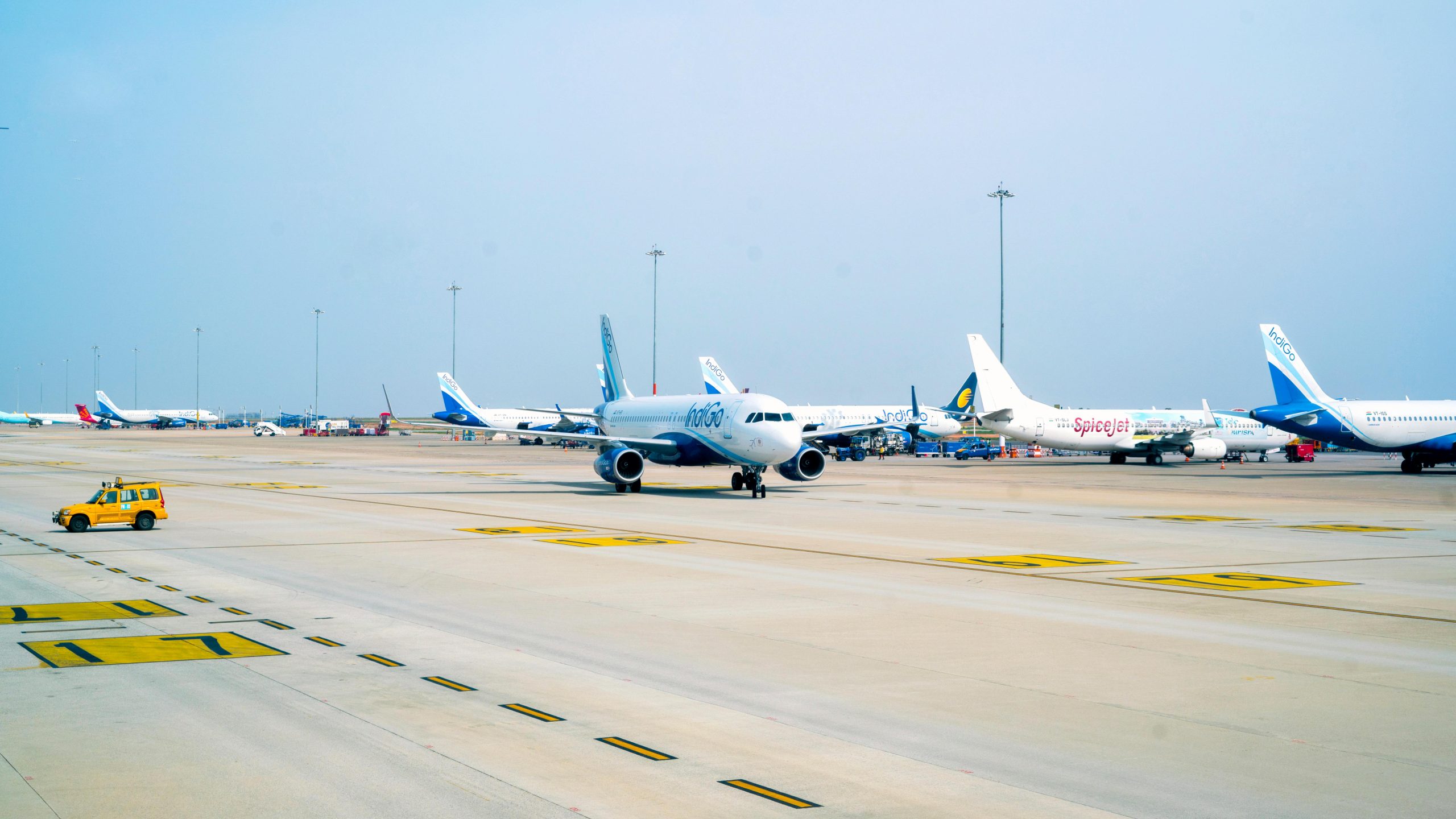
When one airline operates close to two-thirds of domestic capacity, any disruption automatically escalates from an airline issue to a national connectivity issue.
This is not a failure of execution. It is a consequence of structure

Capacity Is Not Just Supply. It Is Systemic Power
In aviation, capacity is not a neutral variable. It directly determines connectivity, affordability, and economic flow
In a diversified market, capacity decisions are distributed. When one airline adds or removes capacity, the system adjusts. In a concentrated market, capacity decisions by a dominant player carry system level implications.
This creates a subtle but important shift. Capacity stops being only a commercial decision and becomes a strategic lever, simply because alternatives do not exist at a comparable scale
This does not require intent, coordination, or strategy. It emerges naturally when market concentration crosses a certain threshold.
Policy Constraints in a Concentrated Market
Aviation policy ideally works best when it is:
• Neutral across operators
• Long-term in orientation
• Designed around system health, not individual outcomes
However, when one airline becomes system-critical, policy flexibility reduces.
Decisions related to slot allocation, airport charges, cost structures, fleet induction, or regulatory timelines cannot be evaluated in isolation. Policymakers are forced to consider the immediate capacity impact of one airline’s response because the system lacks redundancy.
In diversified markets, policy decisions are absorbed collectively. In highly concentrated markets, they are implicitly negotiated through dependence.
This is not a reflection of regulatory weakness. It is a reflection of structural imbalance
Why This Is Not an Airline Problem
It is important to be clear. This is not about questioning the competence, efficiency, or strategy of any one airline.
Any airline operating at this scale in India would create the same dynamics. Efficiency combined with scale naturally leads to dominance. Dominance, in turn, creates dependency
The issue is not whether a large airline should grow. The issue is whether the system should allow growth without a counterbalance.
Global aviation markets have already answered this question, either through competition policy, market design, or structural evolution.
India has not yet done so.

The Missing Shock Absorbers
Every resilient aviation system has shock absorbers. These include:
• Multiple large airlines with overlapping networks
• Scaled low-cost competitors
• Strong regional carriers feeding and redistributing traffic
• Alternate hubs and network pathways
India lacks most of these buffers
The result is a system where recovery depends disproportionately on the speed and capacity decisions of one operator. That is not resilience. That is exposure.
Why This Matters More as India Grows
As India’s aviation market expands, the cost of systemic disruption rises. More passengers, denser networks, and tighter airport capacity mean that future disruptions will have greater economic and social impact.
Growth without diversification increases risk, not resilience
The lesson from the recent disruption is not that Indian aviation is fragile. It is that Indian aviation is over-centralised.
The Strategic Question for India
The key question Indian aviation must now confront is not how to prevent disruptions. Disruptions are inevitable in aviation.
The real question is how to ensure that no single airline’s disruption can paralyse the system.
That answer lies in:
• Encouraging multiple airlines to reach meaningful scale
• Rebuilding a competitive full-service segment
• Allowing low-cost competitors to grow beyond survival mode
• Creating conditions for regional airlines to become relevant feeders, not fringe players
This is not anti-efficiency. It is pro-resilience
Looking Ahead
The recent disruption should be seen as an early warning, not a crisis. It offered clarity, not just inconvenience.
Indian aviation has achieved remarkable growth. The next phase must focus on depth, balance, and redundancy.
Without that, future disruptions will not be exceptions. They will be recurring stress tests of a system that has grown faster than its foundations.
About the author:
Muhammed Hashir, consultant at HNK Management Consulting, partners with businesses to unlock growth, strengthen operations, and drive transformation. Hashir is an alumnus of IIM Nagpur and CET Trivandrum. With over five years of experience in management consulting, business transformation, financial analysis, and strategic planning, Hashir brings practical insights and structured approaches that help organizations navigate complexity and achieve measurable results. He has worked across diverse industries in India and the Middle East, supporting leaders to redesign processes, enhance performance, and align strategy with execution. Passionate about aviation and building from the ground up, Hashir is committed to helping organizations scale sustainably and realize their full potential.


