Opportunities for Low-Cost Carriers in the Indian Aviation Market

Low-cost carriers have been the single most powerful force behind the expansion of Indian aviation.  Affordable fares, high aircraft utilization, and dense route networks brought millions of first-time flyers  into the system and fundamentally changed how India travels. 

Yet, as the market matures, a paradox has emerged. While low-cost travel dominates Indian aviation,  only one low-cost carrier has achieved true scale. The rest operate under constant pressure,  constrained by cost, capital, and network limitations. 

The next opportunity for Indian aviation does not lie in adding more small low-cost airlines. It lies in  building multiple low-cost carriers with scale, depth, and resilience.


Low-Cost Success Has Become Too Concentrated 

India’s low-cost segment is often cited as one of the most competitive in the world. In reality,  competition is highly asymmetric. 

One airline operates at a massive scale with industry-leading cost efficiency. Other low-cost carriers  operate with far smaller fleets, limited network reach, and fragile balance sheets. Instead of competing  aggressively, they are often forced into survival mode. 

This concentration undermines the very principle of low-cost competition. Price discovery becomes  skewed, capacity flexibility reduces, and system resilience weakens. 

In global markets, low-cost success is rarely monopolised by a single airline. 

 

Global Low-Cost Markets Offer a Clear Contrast 

In regions such as Southeast Asia, Europe, and the United States, low-cost carriers thrive because  multiple operators reach meaningful scale. 

Each market supports several large low-cost airlines that compete across overlapping routes, expand  into secondary airports, and provide redundancy during disruptions. No single airline becomes system critical. 

This balance ensures that: 

    • Fares remain competitive without extreme volatility 
    • Capacity shifts are absorbed quickly 
    • Growth does not translate into dependency 

India’s low-cost market has achieved growth, but not balance. 


Why India Can Support More Scaled Low-Cost Carriers 

India’s fundamentals strongly support multiple large low-cost airlines. 

The country has:

    • A large and growing middle class 
    • High price sensitivity combined with rising travel frequency 
    • Increasing preference for short-haul and medium-haul flights 
    • Strong domestic and regional travel demand 

These conditions are ideal for low-cost operations. The constraint has never been in demand. It has  had access to scale and sustained capital support. 

When low-cost carriers remain sub-scale, they struggle to negotiate favourable terms across aircraft  leasing, maintenance, fuel, and airport charges. Scale is not a luxury in this segment. It is a  requirement. 


The Next Phase of Low-Cost Growth 

The first phase of India’s low-cost growth was about proving that affordable air travel could work at  scale. That phase has succeeded. 

The next phase must focus on: 

    • Multiple low-cost carriers are reaching fleet and network depth 
    • Competition based on efficiency and service reliability, not just price 
    • Expansion beyond trunk routes into dense regional and secondary city pairs 

This shift would reduce over-dependence on a single operator and create a more resilient system. 

 

Operational Resilience and Network Redundancy 

Low-cost carriers are often viewed purely as price players. In reality, scaled low-cost airlines play a  critical role in system stability. 

When disruptions occur, airlines with overlapping networks and spare capacity can: 

    • Absorb displaced passengers 
    • Adjust schedules dynamically 
    • Prevent cascading system failures 

India’s current structure lacks this redundancy. A disruption at the dominant low-cost carrier creates  network-wide stress because alternatives do not exist on a comparable scale. 

Multiple scaled low-cost carriers would act as shock absorbers, not just competitors. 


Beyond Survival Economics 

Many Indian low-cost carriers today operate under financial and operational stress. This limits their  ability to invest in technology, reliability, customer experience, and long-term planning. 

Globally, successful low-cost airlines are not fragile entities. They are well-capitalised, operationally  disciplined, and strategically ambitious. 

For India, the opportunity lies in enabling low-cost airlines to:

    • Grow beyond defensive strategies 
    • Invest in operational robustness 
    • Compete on punctuality and consistency, not just fares 

This elevates the entire ecosystem. 


Policy and Market Design Matter 

Low-cost carriers thrive when policy frameworks reward efficiency without creating hidden  dependencies. 

Key enablers include: 

    • Predictable airport access and slot allocation 
    • Rational cost structures 
    • Infrastructure that supports quick turnarounds 
    • Fair competitive conditions 

When these exist, the market naturally produces multiple winners. 


Why This Matters for Indian Passengers 

For passengers, the benefits of multiple scaled low-cost carriers go beyond lower fares. They include: 

    • More flight options during disruptions 
    • Better on-time performance through competition 
    • Reduced fare spikes during peak periods 
    • Genuine choice across airlines and schedules 

A competitive low-cost ecosystem protects consumers not just when things go right, but when things  go wrong. 

 

Looking Ahead 

India does not need to abandon its low-cost success story. It needs to build on it correctly. 

The future of Indian aviation requires more than one dominant low-cost airline. It requires a layer of  strong, scalable competitors that can grow, absorb shocks, and compete sustainably. 

Low-cost aviation has taken India this far. 

Its next evolution will determine how resilient the system becomes. 


About the author: 

Muhammed Hashir, consultant at HNK Management Consulting, partners with businesses to unlock growth, strengthen operations, and drive transformation. Hashir is an alumnus of IIM Nagpur and CET Trivandrum. With over five years of experience in management consulting, business transformation, financial analysis, and strategic planning, Hashir brings practical insights and structured approaches that help organizations navigate complexity and achieve measurable results. He has worked across diverse industries in India and the Middle East, supporting leaders to redesign processes, enhance performance, and align strategy with execution. Passionate about aviation and building from the ground up, Hashir is committed to helping organizations scale sustainably and realize their full potential.
Opportunities for Full-Service Carriers in the Indian Aviation Market

For much of the past decade, India’s aviation growth story has been driven by low-cost carriers. Affordable fares, high aircraft utilisation, and dense domestic routes enabled rapid expansion and mass adoption of air travel. This phase was both necessary and transformative.

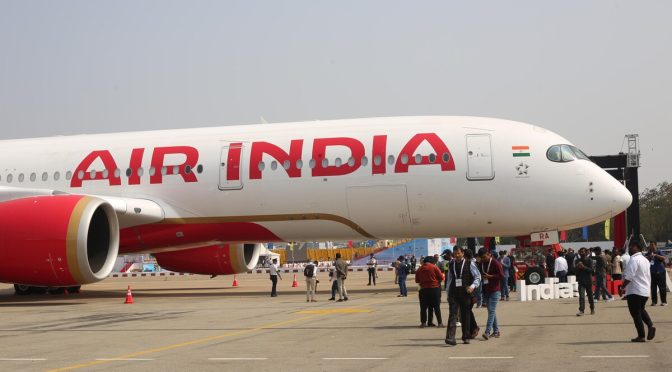
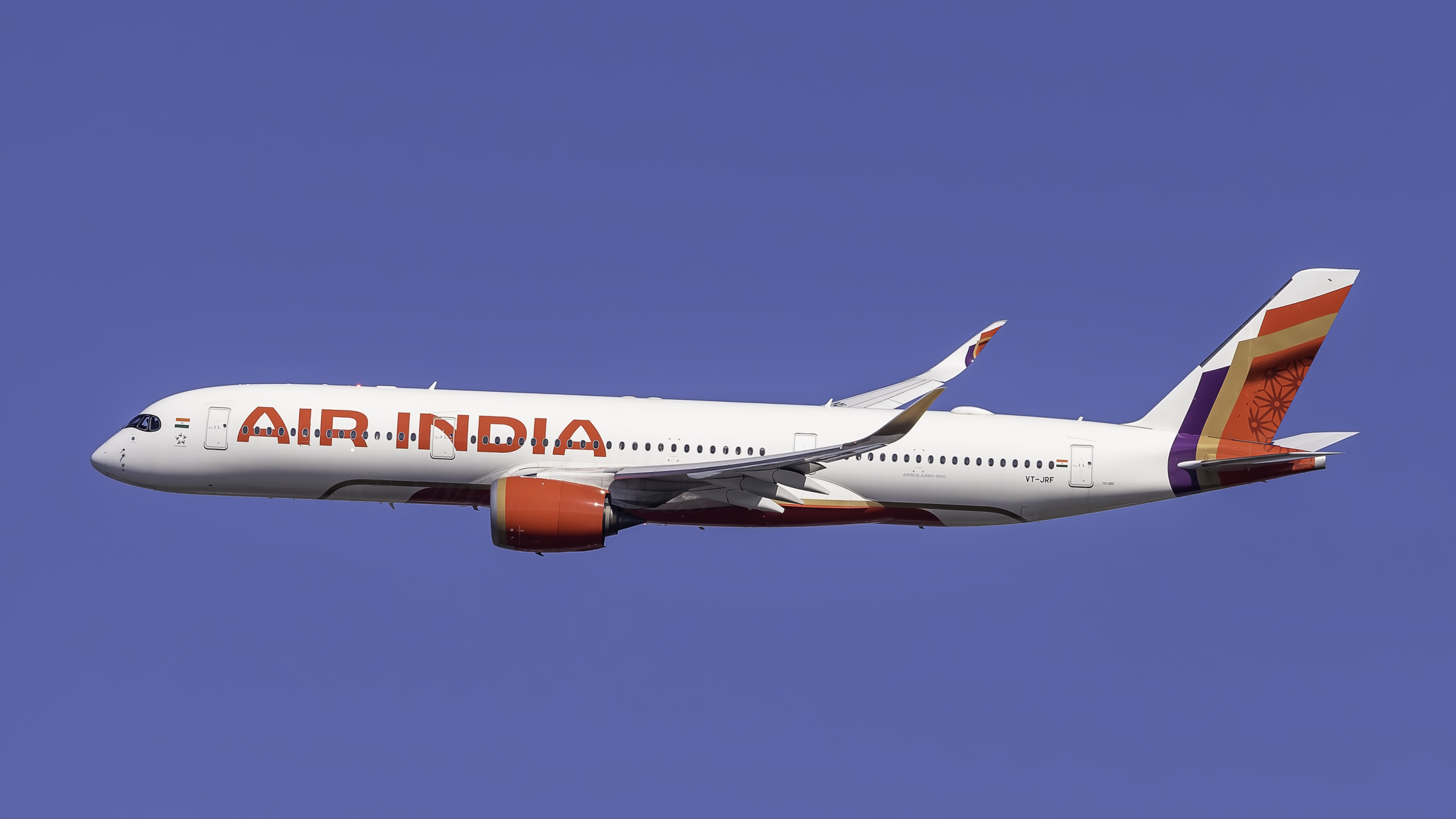
However, as the market matures, a critical imbalance has emerged. India today has only one full service carrier operating at a national scale. For a country of India’s size, economic ambition, and international integration, this is a structural gap with long-term consequences.

The opportunity for additional full-service carriers in India is not theoretical. It is already visible in demand patterns, network gaps, and consumer behaviour.


A Market That Has Outgrown a Single Full-Service Carrier

India is no longer an aviation market defined only by price sensitivity. Corporate travel has expanded, international connectivity has deepened, and a growing segment of passengers now values reliability, network breadth, and premium experience alongside affordability.

In most major aviation markets, full-service carriers perform roles that low-cost models cannot fully replicate. They anchor long-haul routes, participate in global alliances, stabilise hub networks, and offer seamless connectivity across continents.

India’s reliance on a single full-service carrier places excessive responsibility on one operator to meet all these needs simultaneously. That is neither realistic nor sustainable.


International Connectivity Demands Redundancy

India’s global footprint is expanding rapidly. Trade, tourism, education, and professional mobility are driving demand across North America, Europe, the Middle East, East Asia, and Australia.

In comparable markets such as the United States, China, and Europe, multiple full-service carriers compete and coexist. This creates redundancy in international networks and ensures that disruptions, capacity changes, or strategic shifts at one airline do not compromise national connectivity.

India currently lacks this redundancy. International routes are concentrated, alliances are limited, and network risk remains high.

Additional full-service carriers would:

• Expand direct international connectivity

• Reduce dependence on foreign hubs

• Strengthen India’s role in global aviation networks

This is not about prestige. It is about strategic resilience.


Premium Demand Is No Longer a Niche

A common misconception is that India is not yet ready for multiple premium airlines. Market behaviour suggests otherwise.

Premium cabins on domestic and international routes are consistently occupied. Corporate travel has rebounded strongly. High-net-worth leisure travel is growing, especially on long-haul routes. Indian passengers are increasingly comparing service quality globally, not just locally.

The success of premium offerings is not constrained by demand. It is constrained by limited supply and a lack of competition.

Multiple full-service carriers would compete on:

• Product differentiation

• Reliability and punctuality

• Network convenience

• Loyalty and partnerships

This competition would benefit passengers and elevate industry standards.


Hub Development Requires Multiple Anchors

India is investing heavily in airport infrastructure. New terminals, expanded runways, and greenfield airports are being built across the country.

Globally, successful hubs are rarely dependent on a single airline. They are supported by multiple network carriers that anchor traffic flows and create connectivity density.

India’s emerging hubs need:

• More than one network carrier

• Competing long-haul strategies

• Overlapping domestic and international feeds

Without this, hubs risk becoming capacity assets without network depth.


Learning from Global Full-Service Models

Markets such as China offer valuable insight. Despite state involvement, China deliberately maintains multiple large full-service carriers, each with its own hubs, strengths, and regional focus.

This structure allows growth without over-centralisation. It distributes risk, enhances competition, and improves system resilience.

India does not need to replicate any single model. But it can adopt the principle that scale should be shared, not concentrated.


Policy and Capital Alignment

For new or expanded full-service carriers to succeed, alignment is required across policy, capital, and infrastructure.

This does not mean protectionism. It means:

• Predictable regulatory frameworks

• Fair access to slots and bilateral rights

• Long-term visibility for fleet and network planning

When these conditions exist, capital finds opportunity. The demand already exists.


Why This Is the Right Time

India’s aviation market is at an inflexion point. The low-cost expansion phase has delivered scale. The next phase must deliver balance.

Full-service carriers are not in competition with low-cost airlines. They serve different roles within the same ecosystem. Healthy aviation markets require both.

Adding depth to the full-service segment will:

• Reduce systemic risk

• Improve global connectivity

• Enhance consumer choice

• Strengthen India’s aviation resilience


Looking Ahead

India does not need to choose between affordability and quality. It can support both.

The opportunity for additional full-service carriers is not a future possibility. It is a present requirement driven by market maturity, passenger behaviour, and global integration.

Aviation systems do not fail because they grow.

They fail when growth outpaces structure.

India has reached the moment where structure must catch up.


About the author:

Muhammed Hashir, consultant at HNK Management Consulting, partners with businesses to unlock growth, strengthen operations, and drive transformation. Hashir is an alumnus of IIM Nagpur and CET Trivandrum. With over five years of experience in management consulting, business transformation, financial analysis, and strategic planning, Hashir brings practical insights and structured approaches that help organizations navigate complexity and achieve measurable results. He has worked across diverse industries in India and the Middle East, supporting leaders to redesign processes, enhance performance, and align strategy with execution. Passionate about aviation and building from the ground up, Hashir is committed to helping organizations scale sustainably and realize their full potential.
Why India Needs New Airline Players: A Strategic Necessity, Not a Market Luxury

India’s aviation sector is often celebrated for its rapid growth. Passenger volumes are rising, airports are expanding, and air travel is reaching deeper into the country than ever before. On the surface, the story looks overwhelmingly positive.

But growth alone does not define a healthy aviation market.

The events of recent weeks, combined with long-term structural trends, raise a critical question. Can Indian aviation remain resilient, competitive, and consumer-friendly with its current airline structure?

The answer increasingly appears to be no.


The Illusion of Adequate Competition

India technically has multiple airlines. In practice, however, meaningful competition exists only at the margins.

One airline dominates domestic capacity. One airline group accounts for most of the remaining share. The rest operate at sub-scale, often fighting for survival rather than competing on network strength, service differentiation, or innovation.

This creates an illusion of competition without the substance of it.

In mature and fast-growing aviation markets alike, resilience comes not from the presence of many airline brands, but from multiple airlines with meaningful scale. India currently lacks that depth.


Why New Airlines Are Not a Threat to Stability

A common argument against new airline entry is that aviation is already fragile. Margins are thin, costs are high, and failures are frequent. Introducing more players, some argue, could worsen instability.

This reasoning misses a crucial point.

Instability does not come from too many airlines. It comes from too few airlines carrying too much responsibility.

In global aviation markets, failures happen. But they rarely threaten national connectivity because capacity and networks are distributed. In India, the failure or disruption of one major operator has a disproportionate impact precisely because alternatives do not exist at scale.

New airlines are not a risk to stability. They are a prerequisite for it.


The Case for Multiple Full-Service Carriers

India today effectively has a single full-service carrier. For a market of this size and diversity, that is a structural weakness.

Globally, full-service carriers play a vital role beyond premium travel. They anchor long-haul connectivity, support alliances, stabilise international networks, and provide product depth that low-cost models cannot fully replace.

India’s growing premium demand, corporate travel needs, and international ambitions cannot be sustainably served by one operator alone.

The presence of multiple full-service carriers creates:

• Redundancy in long-haul networks

• Competition in service quality and reliability

• Stronger integration with global aviation systems

Without this, India risks under-serving its own economic and strategic potential.

Why Low-Cost Competition Must Go Beyond Survival

Low-cost carriers have been the backbone of India’s aviation growth. However, most low-cost players today operate defensively, constrained by scale, cost pressures, and limited access to capital.

In markets like Southeast Asia, Europe, and the United States, low-cost competition thrives because multiple carriers reach critical mass. They compete aggressively, but none dominates to the extent that the system depends on one.

India needs low-cost airlines that can grow beyond niche routes and selective markets. Scaled low-cost competition improves affordability, stabilises fares, and provides fallback capacity during disruptions.

Without that scale, low-cost carriers remain vulnerable, and the system remains dependent.


The Forgotten Role of Regional Airlines

Regional airlines are often treated as peripheral players in India. In reality, they are essential to system resilience.

In global markets, regional carriers act as:

• Feeders to major hubs

• Buffers during network disruptions

• Connectors for smaller cities and emerging markets

India’s regional airlines remain underdeveloped, under-capitalised, and under-integrated. As a result, connectivity is brittle, and traffic concentration increases further around major hubs and dominant airlines.

A strong regional layer does not dilute competition. It strengthens the network from the bottom up.


Consumer Choice Is Narrower Than It Appears

Indian passengers today benefit from competitive pricing, but pricing alone does not equal choice.

True choice includes:

• Alternate airlines during disruptions

• Different service models

• Network redundancy

• Meaningful competition on reliability and experience

When capacity is concentrated, passengers are exposed to volatility, not empowered by competition.

More airlines with scale would not only improve resilience. They would improve the everyday travel experience.

Policy Support Without Market Distortion

Encouraging new airline players does not mean artificial protection or inefficiency. It means creating conditions where:

• Entry barriers are rational, not prohibitive

• Infrastructure access is equitable

• Growth pathways exist beyond survival mode

Global experience shows that balanced policy frameworks encourage competition while allowing efficient players to thrive.

India does not need to choose between efficiency and diversity. It needs both.

The Strategic Imperative

India is not a small aviation market experimenting with growth. It is a global aviation powerhouse in the making.

With that status comes responsibility. Responsibility to ensure connectivity is resilient. Responsibility to ensure policy flexibility. Responsibility to ensure consumers are protected not just by fares, but by choice.

New airline players are not optional in this journey. They are essential.

Looking Ahead

The future of Indian aviation will not be defined by how fast it grows, but by how well it balances that growth.

A resilient aviation system is not built on dominance. It is built on depth, diversity, and redundancy.

India has achieved scale.

Now it must build a structure.

About the author:

Muhammed Hashir, consultant at HNK Management Consulting, partners with businesses to unlock growth, strengthen operations, and drive transformation. Hashir is an alumnus of IIM Nagpur and CET Trivandrum. With over five years of experience in management consulting, business transformation, financial analysis, and strategic planning, Hashir brings practical insights and structured approaches that help organizations navigate complexity and achieve measurable results. He has worked across diverse industries in India and the Middle East, supporting leaders to redesign processes, enhance performance, and align strategy with execution. Passionate about aviation and building from the ground up, Hashir is committed to helping organizations scale sustainably and realize their full potential.