
Category Archives: Uncategorized

Opportunities for Regional Carriers in the Indian Aviation Market

Regional aviation is often discussed as a supporting act in India’s aviation story. In reality, it is one of  the most critical missing pieces in the country’s airline ecosystem. 

While India has made significant progress in expanding airport infrastructure and improving air travel  affordability, regional connectivity remains uneven, fragile, and underdeveloped. This is not due to a  lack of demand, but due to the absence of strong, scalable regional carriers. 

As Indian aviation grows, the role of regional airlines must shift from marginal participants to structural  pillars of the system. 


Why Regional Aviation Matters More Than Ever 

India’s geography and economic diversity make regional aviation indispensable. Large distances  between cities, uneven rail connectivity, and time-sensitive travel needs create a natural demand for  short-haul flights. 

In mature aviation markets, regional carriers perform functions that neither full-service nor low-cost  airlines can efficiently handle alone. They connect smaller cities to hubs, balance traffic flows, and  provide redundancy during network disruptions. 

India lacks this layer at scale. 

As a result, connectivity is overly concentrated around major metros and dominant airlines, increasing  system fragility. 

 

The Current Reality of Regional Airlines in India 

India does have regional airlines, but most operate at the margins. 

They typically face: 

  • Small fleet sizes 
  • Limited route networks 
  • High operating costs 
  • Weak integration with larger airlines 
  • Inconsistent demand support 

Instead of acting as feeders and buffers, they struggle for survival. This prevents regional aviation from  playing its intended systemic role. 


Global Perspective on Regional Aviation 

In markets such as the United States and China, regional airlines are integral to network design. 

They are not niche operators. They are large employers, stable fleet operators, and essential partners  to major airlines. Their scale allows them to operate efficiently even on thin routes.

This structure ensures that connectivity does not collapse when one airline or hub faces disruption. India has yet to build this layer. 


Untapped Demand Beyond Metro Cities 

India’s next wave of aviation growth will not come solely from metros. It will come from: 

    • Tier 2 and Tier 3 cities 
    • Emerging business hubs 
    • Tourism-driven destinations 
    • Industrial and logistics clusters 

Many of these markets cannot support narrowbody jets at high frequency, but they can sustain  turboprops and regional jets if networks are designed correctly. 

Without strong regional airlines, this demand remains underserved or is forced onto longer surface  transport options. 


Regional Airlines as Shock Absorbers 

Recent disruptions in Indian aviation have highlighted a key weakness. When capacity is concentrated  and networks are shallow, recovery is slow and painful. 

Regional carriers can act as shock absorbers by: 

    • Redistributing passengers through alternate hubs 
    • Maintaining connectivity when trunk routes are disrupted 
    • Supporting rapid recovery during operational stress 

This is only possible when regional airlines operate at a meaningful scale and are well integrated into  the broader system. 

 

Integration Is More Important Than Subsidy 

Regional aviation in India has often been approached through subsidies and incentive schemes. While  support mechanisms are necessary, they are not sufficient. 

What regional carriers need more than subsidies is: 

    • Stable long-term route planning 
    • Seamless integration with major airlines 
    • Predictable airport access 
    • Fleet and maintenance ecosystems that support scale 

Regional aviation succeeds when it is embedded in the national network, not treated as a standalone  experiment. 


A Strong Regional Layer Reduces Concentration Risk

One of the core themes of this series has been concentration risk. Regional carriers directly address  this issue. 

By distributing traffic flows and expanding connectivity away from a few dominant nodes, regional  airlines: 

    • Reduce dependence on single operators 
    • Increase network redundancy 
    • Improve overall system resilience 

This is not about competing with large airlines. It is about complementing them. 


The Strategic Opportunity Ahead 

India is building airports faster than ever before. If regional aviation is allowed to mature alongside  this infrastructure, the payoff will be substantial. 

The opportunity exists to create: 

    • Multiple strong regional carriers 
    • Hub-and-spoke systems that extend beyond metros 
    • Balanced growth across geographies 
    • A more inclusive aviation network 

Without this, infrastructure risks outpace airline capability. 


Looking Ahead 

India’s aviation journey has so far focused on scale. The next phase must focus on structure. Full-service carriers provide global reach. 

Low-cost carriers deliver affordability. 

Regional carriers provide depth, resilience, and inclusivity. 

Aviation systems fail when one of these layers is weak. 

India has reached the moment where regional aviation must move from the periphery to the core.


Closing the Series 

This series set out to answer a simple question. Why does Indian aviation remain vulnerable despite  rapid growth? 

The answer is now clear. 

India does not suffer from a lack of demand, ambition, or efficiency. It suffers from structural  imbalance.

The path forward is not fewer airlines. 

It is more strong airlines across all segments. 

Growth brought India into the global aviation spotlight. 

Balance will determine how long it stays there. 



About the author: 

Muhammed Hashir, consultant at HNK Management Consulting, partners with businesses to unlock  growth, strengthen operations, and drive transformation. Hashir is an alumnus of IIM Nagpur and CET  Trivandrum. With over five years of experience in management consulting, business transformation,  financial analysis, and strategic planning, Hashir brings practical insights and structured approaches  that help organizations navigate complexity and achieve measurable results. He has worked across  diverse industries in India and the Middle East, supporting leaders to redesign processes, enhance  performance, and align strategy with execution. Passionate about aviation and building from the  ground up, Hashir is committed to helping organizations scale sustainably and realize their full  potential.

Opportunities for Low-Cost Carriers in the Indian Aviation Market

Low-cost carriers have been the single most powerful force behind the expansion of Indian aviation.  Affordable fares, high aircraft utilization, and dense route networks brought millions of first-time flyers  into the system and fundamentally changed how India travels. 

Yet, as the market matures, a paradox has emerged. While low-cost travel dominates Indian aviation,  only one low-cost carrier has achieved true scale. The rest operate under constant pressure,  constrained by cost, capital, and network limitations. 

The next opportunity for Indian aviation does not lie in adding more small low-cost airlines. It lies in  building multiple low-cost carriers with scale, depth, and resilience.


Low-Cost Success Has Become Too Concentrated 

India’s low-cost segment is often cited as one of the most competitive in the world. In reality,  competition is highly asymmetric. 

One airline operates at a massive scale with industry-leading cost efficiency. Other low-cost carriers  operate with far smaller fleets, limited network reach, and fragile balance sheets. Instead of competing  aggressively, they are often forced into survival mode. 

This concentration undermines the very principle of low-cost competition. Price discovery becomes  skewed, capacity flexibility reduces, and system resilience weakens. 

In global markets, low-cost success is rarely monopolised by a single airline. 


Global Low-Cost Markets Offer a Clear Contrast 

In regions such as Southeast Asia, Europe, and the United States, low-cost carriers thrive because  multiple operators reach meaningful scale. 

Each market supports several large low-cost airlines that compete across overlapping routes, expand  into secondary airports, and provide redundancy during disruptions. No single airline becomes system critical. 

This balance ensures that: 

    • Fares remain competitive without extreme volatility 
    • Capacity shifts are absorbed quickly 
    • Growth does not translate into dependency 

India’s low-cost market has achieved growth, but not balance. 


Why India Can Support More Scaled Low-Cost Carriers 

India’s fundamentals strongly support multiple large low-cost airlines. 

The country has:

    • A large and growing middle class 
    • High price sensitivity combined with rising travel frequency 
    • Increasing preference for short-haul and medium-haul flights 
    • Strong domestic and regional travel demand 

These conditions are ideal for low-cost operations. The constraint has never been in demand. It has  had access to scale and sustained capital support. 

When low-cost carriers remain sub-scale, they struggle to negotiate favourable terms across aircraft  leasing, maintenance, fuel, and airport charges. Scale is not a luxury in this segment. It is a  requirement. 


The Next Phase of Low-Cost Growth 

The first phase of India’s low-cost growth was about proving that affordable air travel could work at  scale. That phase has succeeded. 

The next phase must focus on: 

    • Multiple low-cost carriers are reaching fleet and network depth 
    • Competition based on efficiency and service reliability, not just price 
    • Expansion beyond trunk routes into dense regional and secondary city pairs 

This shift would reduce over-dependence on a single operator and create a more resilient system. 


Operational Resilience and Network Redundancy 

Low-cost carriers are often viewed purely as price players. In reality, scaled low-cost airlines play a  critical role in system stability. 

When disruptions occur, airlines with overlapping networks and spare capacity can: 

    • Absorb displaced passengers 
    • Adjust schedules dynamically 
    • Prevent cascading system failures 

India’s current structure lacks this redundancy. A disruption at the dominant low-cost carrier creates  network-wide stress because alternatives do not exist on a comparable scale. 

Multiple scaled low-cost carriers would act as shock absorbers, not just competitors. 


Beyond Survival Economics 

Many Indian low-cost carriers today operate under financial and operational stress. This limits their  ability to invest in technology, reliability, customer experience, and long-term planning. 

Globally, successful low-cost airlines are not fragile entities. They are well-capitalised, operationally  disciplined, and strategically ambitious. 

For India, the opportunity lies in enabling low-cost airlines to:

    • Grow beyond defensive strategies 
    • Invest in operational robustness 
    • Compete on punctuality and consistency, not just fares 

This elevates the entire ecosystem. 


Policy and Market Design Matter 

Low-cost carriers thrive when policy frameworks reward efficiency without creating hidden  dependencies. 

Key enablers include: 

    • Predictable airport access and slot allocation 
    • Rational cost structures 
    • Infrastructure that supports quick turnarounds 
    • Fair competitive conditions 

When these exist, the market naturally produces multiple winners. 


Why This Matters for Indian Passengers 

For passengers, the benefits of multiple scaled low-cost carriers go beyond lower fares. They include: 

    • More flight options during disruptions 
    • Better on-time performance through competition 
    • Reduced fare spikes during peak periods 
    • Genuine choice across airlines and schedules 

A competitive low-cost ecosystem protects consumers not just when things go right, but when things  go wrong. 


Looking Ahead 

India does not need to abandon its low-cost success story. It needs to build on it correctly. 

The future of Indian aviation requires more than one dominant low-cost airline. It requires a layer of  strong, scalable competitors that can grow, absorb shocks, and compete sustainably. 

Low-cost aviation has taken India this far. 

Its next evolution will determine how resilient the system becomes. 


About the author: 

Muhammed Hashir, consultant at HNK Management Consulting, partners with businesses to unlock growth, strengthen operations, and drive transformation. Hashir is an alumnus of IIM Nagpur and CET Trivandrum. With over five years of experience in management consulting, business transformation, financial analysis, and strategic planning, Hashir brings practical insights and structured approaches that help organizations navigate complexity and achieve measurable results. He has worked across diverse industries in India and the Middle East, supporting leaders to redesign processes, enhance performance, and align strategy with execution. Passionate about aviation and building from the ground up, Hashir is committed to helping organizations scale sustainably and realize their full potential.


Opportunities for Full-Service Carriers in the Indian Aviation Market

For much of the past decade, India’s aviation growth story has been driven by low-cost carriers. Affordable fares, high aircraft utilisation, and dense domestic routes enabled rapid expansion and mass adoption of air travel. This phase was both necessary and transformative.

However, as the market matures, a critical imbalance has emerged. India today has only one full service carrier operating at a national scale. For a country of India’s size, economic ambition, and international integration, this is a structural gap with long-term consequences.

The opportunity for additional full-service carriers in India is not theoretical. It is already visible in demand patterns, network gaps, and consumer behaviour.


A Market That Has Outgrown a Single Full-Service Carrier

India is no longer an aviation market defined only by price sensitivity. Corporate travel has expanded, international connectivity has deepened, and a growing segment of passengers now values reliability, network breadth, and premium experience alongside affordability.

In most major aviation markets, full-service carriers perform roles that low-cost models cannot fully replicate. They anchor long-haul routes, participate in global alliances, stabilise hub networks, and offer seamless connectivity across continents.

India’s reliance on a single full-service carrier places excessive responsibility on one operator to meet all these needs simultaneously. That is neither realistic nor sustainable.


International Connectivity Demands Redundancy

India’s global footprint is expanding rapidly. Trade, tourism, education, and professional mobility are driving demand across North America, Europe, the Middle East, East Asia, and Australia.

In comparable markets such as the United States, China, and Europe, multiple full-service carriers compete and coexist. This creates redundancy in international networks and ensures that disruptions, capacity changes, or strategic shifts at one airline do not compromise national connectivity.

India currently lacks this redundancy. International routes are concentrated, alliances are limited, and network risk remains high.

Additional full-service carriers would:

• Expand direct international connectivity

• Reduce dependence on foreign hubs

• Strengthen India’s role in global aviation networks

This is not about prestige. It is about strategic resilience.


Premium Demand Is No Longer a Niche

A common misconception is that India is not yet ready for multiple premium airlines. Market behaviour suggests otherwise.

Premium cabins on domestic and international routes are consistently occupied. Corporate travel has rebounded strongly. High-net-worth leisure travel is growing, especially on long-haul routes. Indian passengers are increasingly comparing service quality globally, not just locally.

The success of premium offerings is not constrained by demand. It is constrained by limited supply and a lack of competition.

Multiple full-service carriers would compete on:

• Product differentiation

• Reliability and punctuality

• Network convenience

• Loyalty and partnerships

This competition would benefit passengers and elevate industry standards.


Hub Development Requires Multiple Anchors

India is investing heavily in airport infrastructure. New terminals, expanded runways, and greenfield airports are being built across the country.

Globally, successful hubs are rarely dependent on a single airline. They are supported by multiple network carriers that anchor traffic flows and create connectivity density.

India’s emerging hubs need:

• More than one network carrier

• Competing long-haul strategies

• Overlapping domestic and international feeds

Without this, hubs risk becoming capacity assets without network depth.


Learning from Global Full-Service Models

Markets such as China offer valuable insight. Despite state involvement, China deliberately maintains multiple large full-service carriers, each with its own hubs, strengths, and regional focus.

This structure allows growth without over-centralisation. It distributes risk, enhances competition, and improves system resilience.

India does not need to replicate any single model. But it can adopt the principle that scale should be shared, not concentrated.


Policy and Capital Alignment

For new or expanded full-service carriers to succeed, alignment is required across policy, capital, and infrastructure.

This does not mean protectionism. It means:

• Predictable regulatory frameworks

• Fair access to slots and bilateral rights

• Long-term visibility for fleet and network planning

When these conditions exist, capital finds opportunity. The demand already exists.


Why This Is the Right Time

India’s aviation market is at an inflexion point. The low-cost expansion phase has delivered scale. The next phase must deliver balance.

Full-service carriers are not in competition with low-cost airlines. They serve different roles within the same ecosystem. Healthy aviation markets require both.

Adding depth to the full-service segment will:

• Reduce systemic risk

• Improve global connectivity

• Enhance consumer choice

• Strengthen India’s aviation resilience


Looking Ahead

India does not need to choose between affordability and quality. It can support both.

The opportunity for additional full-service carriers is not a future possibility. It is a present requirement driven by market maturity, passenger behaviour, and global integration.

Aviation systems do not fail because they grow.

They fail when growth outpaces structure.

India has reached the moment where structure must catch up.


About the author:

Muhammed Hashir, consultant at HNK Management Consulting, partners with businesses to unlock growth, strengthen operations, and drive transformation. Hashir is an alumnus of IIM Nagpur and CET Trivandrum. With over five years of experience in management consulting, business transformation, financial analysis, and strategic planning, Hashir brings practical insights and structured approaches that help organizations navigate complexity and achieve measurable results. He has worked across diverse industries in India and the Middle East, supporting leaders to redesign processes, enhance performance, and align strategy with execution. Passionate about aviation and building from the ground up, Hashir is committed to helping organizations scale sustainably and realize their full potential.

Why India Needs New Airline Players: A Strategic Necessity, Not a Market Luxury

India’s aviation sector is often celebrated for its rapid growth. Passenger volumes are rising, airports are expanding, and air travel is reaching deeper into the country than ever before. On the surface, the story looks overwhelmingly positive.

But growth alone does not define a healthy aviation market.

The events of recent weeks, combined with long-term structural trends, raise a critical question. Can Indian aviation remain resilient, competitive, and consumer-friendly with its current airline structure?

The answer increasingly appears to be no.


The Illusion of Adequate Competition

India technically has multiple airlines. In practice, however, meaningful competition exists only at the margins.

One airline dominates domestic capacity. One airline group accounts for most of the remaining share. The rest operate at sub-scale, often fighting for survival rather than competing on network strength, service differentiation, or innovation.

This creates an illusion of competition without the substance of it.

In mature and fast-growing aviation markets alike, resilience comes not from the presence of many airline brands, but from multiple airlines with meaningful scale. India currently lacks that depth.


Why New Airlines Are Not a Threat to Stability

A common argument against new airline entry is that aviation is already fragile. Margins are thin, costs are high, and failures are frequent. Introducing more players, some argue, could worsen instability.

This reasoning misses a crucial point.

Instability does not come from too many airlines. It comes from too few airlines carrying too much responsibility.

In global aviation markets, failures happen. But they rarely threaten national connectivity because capacity and networks are distributed. In India, the failure or disruption of one major operator has a disproportionate impact precisely because alternatives do not exist at scale.

New airlines are not a risk to stability. They are a prerequisite for it.


The Case for Multiple Full-Service Carriers

India today effectively has a single full-service carrier. For a market of this size and diversity, that is a structural weakness.

Globally, full-service carriers play a vital role beyond premium travel. They anchor long-haul connectivity, support alliances, stabilise international networks, and provide product depth that low-cost models cannot fully replace.

India’s growing premium demand, corporate travel needs, and international ambitions cannot be sustainably served by one operator alone.

The presence of multiple full-service carriers creates:

• Redundancy in long-haul networks

• Competition in service quality and reliability

• Stronger integration with global aviation systems

Without this, India risks under-serving its own economic and strategic potential.

Why Low-Cost Competition Must Go Beyond Survival

Low-cost carriers have been the backbone of India’s aviation growth. However, most low-cost players today operate defensively, constrained by scale, cost pressures, and limited access to capital.

In markets like Southeast Asia, Europe, and the United States, low-cost competition thrives because multiple carriers reach critical mass. They compete aggressively, but none dominates to the extent that the system depends on one.

India needs low-cost airlines that can grow beyond niche routes and selective markets. Scaled low-cost competition improves affordability, stabilises fares, and provides fallback capacity during disruptions.

Without that scale, low-cost carriers remain vulnerable, and the system remains dependent.


The Forgotten Role of Regional Airlines

Regional airlines are often treated as peripheral players in India. In reality, they are essential to system resilience.

In global markets, regional carriers act as:

• Feeders to major hubs

• Buffers during network disruptions

• Connectors for smaller cities and emerging markets

India’s regional airlines remain underdeveloped, under-capitalised, and under-integrated. As a result, connectivity is brittle, and traffic concentration increases further around major hubs and dominant airlines.

A strong regional layer does not dilute competition. It strengthens the network from the bottom up.


Consumer Choice Is Narrower Than It Appears

Indian passengers today benefit from competitive pricing, but pricing alone does not equal choice.

True choice includes:

• Alternate airlines during disruptions

• Different service models

• Network redundancy

• Meaningful competition on reliability and experience

When capacity is concentrated, passengers are exposed to volatility, not empowered by competition.

More airlines with scale would not only improve resilience. They would improve the everyday travel experience.

Policy Support Without Market Distortion

Encouraging new airline players does not mean artificial protection or inefficiency. It means creating conditions where:

• Entry barriers are rational, not prohibitive

• Infrastructure access is equitable

• Growth pathways exist beyond survival mode

Global experience shows that balanced policy frameworks encourage competition while allowing efficient players to thrive.

India does not need to choose between efficiency and diversity. It needs both.

The Strategic Imperative

India is not a small aviation market experimenting with growth. It is a global aviation powerhouse in the making.

With that status comes responsibility. Responsibility to ensure connectivity is resilient. Responsibility to ensure policy flexibility. Responsibility to ensure consumers are protected not just by fares, but by choice.

New airline players are not optional in this journey. They are essential.

Looking Ahead

The future of Indian aviation will not be defined by how fast it grows, but by how well it balances that growth.

A resilient aviation system is not built on dominance. It is built on depth, diversity, and redundancy.

India has achieved scale.

Now it must build a structure.

About the author:

Muhammed Hashir, consultant at HNK Management Consulting, partners with businesses to unlock growth, strengthen operations, and drive transformation. Hashir is an alumnus of IIM Nagpur and CET Trivandrum. With over five years of experience in management consulting, business transformation, financial analysis, and strategic planning, Hashir brings practical insights and structured approaches that help organizations navigate complexity and achieve measurable results. He has worked across diverse industries in India and the Middle East, supporting leaders to redesign processes, enhance performance, and align strategy with execution. Passionate about aviation and building from the ground up, Hashir is committed to helping organizations scale sustainably and realize their full potential.

What the Recent IndiGo Disruption Revealed About Indian Aviation

The recent operational disruption involving India’s largest airline was widely discussed as an airline specific issue. Flight delays, cancellations, stranded passengers, and cascading network effects dominated headlines for days. Yet, once the immediate operational noise settled, a deeper and more uncomfortable reality became visible.

The disruption did not merely expose operational stress at one airline. It revealed structural fragility in the Indian aviation ecosystem itself.

This distinction matters because operational issues can be fixed quickly. Structural issues cannot.


From Airline Disruption to System Disruption

In most major aviation markets, disruptions at one airline remain contained. Passengers are reaccommodated by competitors, capacity shifts across the system, and recovery happens through redistribution.

In India, that did not happen.

The disruption rapidly became a system-wide event. Airports slowed, schedules collapsed across networks, fares spiked, and recovery timelines stretched. This was not because Indian aviation lacks capability or experience. It happened because too much capacity sits with too few operators.

When one airline operates close to two-thirds of domestic capacity, any disruption automatically escalates from an airline issue to a national connectivity issue.

This is not a failure of execution. It is a consequence of structure


Capacity Is Not Just Supply. It Is Systemic Power

In aviation, capacity is not a neutral variable. It directly determines connectivity, affordability, and economic flow

In a diversified market, capacity decisions are distributed. When one airline adds or removes capacity, the system adjusts. In a concentrated market, capacity decisions by a dominant player carry system level implications.

This creates a subtle but important shift. Capacity stops being only a commercial decision and becomes a strategic lever, simply because alternatives do not exist at a comparable scale

This does not require intent, coordination, or strategy. It emerges naturally when market concentration crosses a certain threshold.


Policy Constraints in a Concentrated Market

Aviation policy ideally works best when it is:

• Neutral across operators

• Long-term in orientation

• Designed around system health, not individual outcomes

However, when one airline becomes system-critical, policy flexibility reduces.

Decisions related to slot allocation, airport charges, cost structures, fleet induction, or regulatory timelines cannot be evaluated in isolation. Policymakers are forced to consider the immediate capacity impact of one airline’s response because the system lacks redundancy.

In diversified markets, policy decisions are absorbed collectively. In highly concentrated markets, they are implicitly negotiated through dependence.

This is not a reflection of regulatory weakness. It is a reflection of structural imbalance


Why This Is Not an Airline Problem

It is important to be clear. This is not about questioning the competence, efficiency, or strategy of any one airline.

Any airline operating at this scale in India would create the same dynamics. Efficiency combined with scale naturally leads to dominance. Dominance, in turn, creates dependency

The issue is not whether a large airline should grow. The issue is whether the system should allow growth without a counterbalance.

Global aviation markets have already answered this question, either through competition policy, market design, or structural evolution.

India has not yet done so.


The Missing Shock Absorbers

Every resilient aviation system has shock absorbers. These include:

• Multiple large airlines with overlapping networks

• Scaled low-cost competitors

• Strong regional carriers feeding and redistributing traffic

• Alternate hubs and network pathways

India lacks most of these buffers

The result is a system where recovery depends disproportionately on the speed and capacity decisions of one operator. That is not resilience. That is exposure.


Why This Matters More as India Grows

As India’s aviation market expands, the cost of systemic disruption rises. More passengers, denser networks, and tighter airport capacity mean that future disruptions will have greater economic and social impact.

Growth without diversification increases risk, not resilience

The lesson from the recent disruption is not that Indian aviation is fragile. It is that Indian aviation is over-centralised.


The Strategic Question for India

The key question Indian aviation must now confront is not how to prevent disruptions. Disruptions are inevitable in aviation.

The real question is how to ensure that no single airline’s disruption can paralyse the system.

That answer lies in:

• Encouraging multiple airlines to reach meaningful scale

• Rebuilding a competitive full-service segment

• Allowing low-cost competitors to grow beyond survival mode

• Creating conditions for regional airlines to become relevant feeders, not fringe players

This is not anti-efficiency. It is pro-resilience


Looking Ahead

The recent disruption should be seen as an early warning, not a crisis. It offered clarity, not just inconvenience.

Indian aviation has achieved remarkable growth. The next phase must focus on depth, balance, and redundancy.

Without that, future disruptions will not be exceptions. They will be recurring stress tests of a system that has grown faster than its foundations.


About the author:

Muhammed Hashir, consultant at HNK Management Consulting, partners with businesses to unlock growth, strengthen operations, and drive transformation. Hashir is an alumnus of IIM Nagpur and CET Trivandrum. With over five years of experience in management consulting, business transformation, financial analysis, and strategic planning, Hashir brings practical insights and structured approaches that help organizations navigate complexity and achieve measurable results. He has worked across diverse industries in India and the Middle East, supporting leaders to redesign processes, enhance performance, and align strategy with execution. Passionate about aviation and building from the ground up, Hashir is committed to helping organizations scale sustainably and realize their full potential.
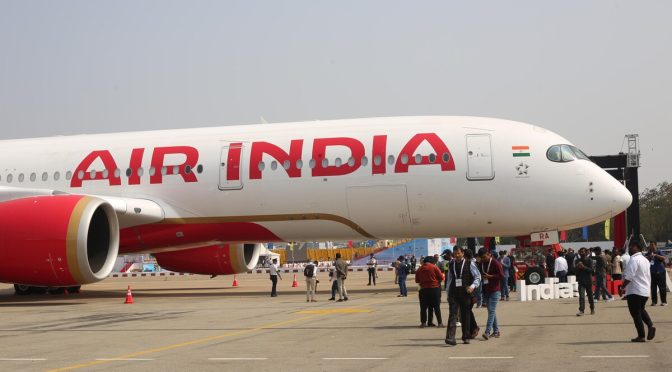
Indian Aviation vs the World: Why Growth Without Depth Is a Risk

India today stands at a fascinating crossroads in aviation. Passenger numbers are rising rapidly, airports are expanding at a record pace, and air travel is becoming increasingly affordable for millions. By most growth indicators, India is already among the world’s leading aviation markets.

And yet, recent operational disruptions involving the country’s largest airline have exposed an uncomfortable truth. India’s aviation growth is not matched by structural depth.

This is not a story about one airline or one incident. It is a story about how the Indian aviation market is built, and why that structure makes it uniquely vulnerable compared to global peers.


A Growing Market with a Narrow Base

Globally, large aviation markets tend to share a common characteristic. They have a diversity of airlines with meaningful scale. Whether it is the United States, Europe, China, or Southeast Asia, no single airline dominates capacity to the extent seen in India.

In India, one airline accounts for roughly two-thirds of domestic market share, while the second largest group takes most of the remaining capacity. All other carriers combined operate at the margins. This creates a market that looks large on the surface, but is structurally narrow underneath.

Growth, in this context, has been vertical rather than horizontal.


How Global Markets Are Structured Differently

In the United States, the world’s largest aviation market, the biggest airline typically holds around 18 to 20 per cent share. Two or three others operate at a similar scale, followed by a deep layer of low-cost and regional carriers. This ensures that disruptions at one airline remain airline-specific problems, not system-wide events.

Europe shows a similar pattern, with an even stronger low-cost presence. Multiple airline groups coexist, compete, and absorb shocks. Even when a large carrier faces operational issues, traffic redistributes quickly.

China, often compared with India due to population and growth, offers perhaps the most telling contrast. Despite being a state-influenced market, China deliberately maintains three large network carriers, supported by strong regional airlines. Capacity is balanced by design, not left to consolidate organically

India, by comparison, has allowed scale to concentrate without sufficient counterweights.


Why Concentration Becomes a Systemic Risk

Aviation is unlike many other industries. It operates on tight schedules, shared infrastructure, and interconnected networks. When one airline controls a majority of capacity, any disruption related to weather, crew shortages, technical issues, or system failures quickly cascades across the entire system. The recent disruption did not cripple Indian aviation because of poor execution alone. It had an outsized impact because there was no alternate capacity at scale to absorb displaced passengers.

In global markets, redundancy is not inefficiency. It is resilience.


The Absence of Product and Network Choice

Another structural weakness lies in product diversity. India today effectively has:

• One full-service carrier

• One dominant low-cost carrier

• A handful of under scaled competitors

• A weak regional airline ecosystem

In contrast, most major markets sustain multiple full-service carriers competing on network quality, alliances, and premium experience. Low-cost carriers compete fiercely on price and frequency, while regional airlines ensure last-mile connectivity and network resilience.

Indian consumers may see competitive fares, but in reality, they face limited real choice, especially when disruptions occur


Growth Has Outpaced Market Design

India’s aviation success has been demand-driven. Rising incomes, aspirational travel, and improved affordability have done the heavy lifting. What has not kept pace is market design.

Airline failures, mergers, and exits over the past decade have steadily reduced the number of meaningful players. Instead of multiple mid-sized airlines growing in parallel, the market has tilted toward dominance by one exceptionally efficient operator.

Efficiency, however, cannot substitute for ecosystem balance.


What the Recent Disruption Really Revealed

The recent disruption did not reveal weaknesses in one airline alone. It revealed the absence of shock absorbers in the Indian aviation system.

In a diversified market:

• Delays are redistributed

• Capacity shifts

• Recovery is faster

In India:

• Delays multiply

• Capacity disappears

• Recovery depends on one airline’s internal resolution.


The Core Question India Must Ask

The key question is not whether one airline is too big.

The real question is whether India has allowed itself to become too dependent on a single operator.

Every leading aviation market in the world has concluded, either explicitly or implicitly, that no single airline should become a systemic pillar.

India has not yet reached that conclusion.


Looking Ahead

India does not lack demand.

India does not lack passengers willing to pay.

India does not lack ambition or infrastructure investment.

What India lacks is depth.

As the market matures, the next phase of Indian aviation growth must focus not just on adding capacity, but on adding players. This includes full-service carriers, scaled low-cost competitors, and strong regional airlines.

Without that, growth will continue, but so will vulnerability


About the author:

Muhammed Hashir, consultant at HNK Management Consulting, partners with businesses to unlock growth, strengthen operations, and drive transformation. Hashir is an alumnus of IIM Nagpur and CET Trivandrum. With over five years of experience in management consulting, business transformation, financial analysis, and strategic planning, Hashir brings practical insights and structured approaches that help organizations navigate complexity and achieve measurable results. He has worked across diverse industries in India and the Middle East, supporting leaders to redesign processes, enhance performance, and align strategy with execution. Passionate about aviation and building from the ground up, Hashir is committed to helping organizations scale sustainably and realize their full potential.

Why JD and KPIs Are Important in MSMEs: Creating Clarity, Accountability, and High-Performance Teams

As micro, small, and medium enterprises (MSMEs) grow, one of the most common challenges they face is managing people effectively. Many MSMEs start with small teams where everyone handles multiple responsibilities. Roles evolve naturally, communication is informal, and performance is assessed through observation rather than structured evaluation. While this works in early stages, it becomes a major obstacle as the organisation expands.

Job Descriptions (JDs) and Key Performance Indicators (KPIs) play a crucial role in strengthening people management. They define expectations, align teams, and create a culture of accountability. For MSMEs preparing to scale, JDs and KPIs provide the clarity and structure needed to build strong, motivated, and high-performing teams.

Why Many MSMEs Operate Without JDs and KPIs

It is common to see MSMEs relying on verbal instructions, shifting responsibilities, and reactive task assignments. This happens because:

• Founders or senior leaders are deeply involved in day-to-day decisions

• Employees often multitask across departments

• Roles evolve faster than documentation

• Leaders assume everyone understands their responsibilities

While informal systems feel flexible, they eventually lead to misunderstandings, uneven workloads, and inconsistent work quality. Employees may feel unsure about what they are accountable for, or believe they are performing well even when results are below expectations.

This lack of structure affects both performance and culture


Importance of Clear Job Descriptions

A Job Description is more than a list of tasks. It defines the purpose of the role, key responsibilities, required competencies, and reporting lines. For MSMEs, well-designed JDs help in several important ways.

1. Provides clarity of roles and responsibilities: – Employees know what they are expected to deliver and what is outside their scope. This reduces confusion and helps teams work more efficiently.

2. Improves recruitment and onboarding: – Clear JDs attract candidates who match the role and help new employees integrate into the organisation faster.

3. Supports performance evaluation and accountability: – Leaders can objectively assess whether responsibilities are being met. Employees also understand how their performance will be evaluated, which reduces conflict and uncertainty.

4. Enables smooth scaling and delegation: – As the organisation grows, JDs ensure that work is distributed properly and new positions are defined with clarity.

Why KPIs Matter for High Performance

Key Performance Indicators translate responsibilities into measurable outcomes. They answer the question: “What does success look like in this role?”

For MSMEs, KPIs play a crucial role in building a performance-driven culture.

1. Creates measurable expectations: – Instead of vague instructions such as “improve sales” or “reduce delays,” KPIs provide specific targets. This helps employees focus on what matters most.

2. Drives accountability and ownership: – When results are measured, monitored, and reviewed consistently, employees take greater responsibility for their work.

3. Improves decision-making: – Leaders get clear insights into performance trends, allowing them to take corrective action early.

4. Motivates employees through transparency: – KPIs create fairness. Everyone understands the criteria for success, which motivates employees to improve their performance.


JDs and KPIs Work Best Together

A JD explains “what” an employee is responsible for, while KPIs show “how” success is measured. When used together, they form a powerful foundation for effective people management.

For example:

A Sales Executive’s JD may include responsibilities such as lead generation, client meetings, and maintaining customer relationships.

KPIs then define targets like monthly revenue, leads converted, customer visits, or retention rates

This combination ensures both clarity and measurable outcomes.


Common Challenges MSMEs Face Without JDs and KPIs


Many MSMEs encounter challenges such as:

• Overlapping responsibilities between employees

• Teams waiting for instructions instead of acting independently

• Slow decision-making because roles are unclear

• Performance gaps that go unaddressed

• Conflict arising from mismatched expectations

These issues are not caused by lack of talent but by lack of structure. JDs and KPIs help eliminate these gaps.

Building a Performance Culture in MSMEs

Implementing JDs and KPIs shifts MSMEs from a task-based environment to a performance-based culture. Employees become more proactive, managers get better visibility, and leadership gains confidence in the organisation’s ability to scale.

This shift also helps identify high performers, highlight skill gaps, and plan training or hiring in a strategic way.


How HNK Helps MSMEs Strengthen People Management

At HNK, we support MSMEs in designing clear JDs and practical KPIs that match each role’s purpose and the organisation’s strategic goals. Our approach focuses on:

• Understanding the current organisational structure

• Defining roles based on actual business needs

• Identifying measurable KPIs for each function

• Creating performance systems that leaders can use consistently

• Training managers to implement these tools effectively

This structured approach brings clarity, accountability, and alignment across teams, helping MSMEs manage growth confidently and sustainably.


Conclusion

For MSMEs, the absence of clear JDs and KPIs often leads to confusion, inefficiency, and inconsistent performance. As the organisation grows, these issues become more difficult and costly to manage.

By introducing structured Job Descriptions and measurable KPIs, MSMEs can build disciplined teams, improve productivity, and create a culture of ownership. These tools ensure that employees understand their roles, are aligned with organisational goals, and are motivated to contribute to long-term success.

With the right structure in place, MSMEs can grow not just in size but in capability, stability, and performance.


About the author:

Muhammed Hashir, consultant at HNK Management Consulting, partners with businesses to unlock growth, strengthen operations, and drive transformation. Hashir is an alumnus of IIM Nagpur and CET Trivandrum and worked with leading consulting firms in the world, including E&Y, HLB and Axtria. With over five years of experience in management consulting, business transformation, financial analysis, and strategic planning, Hashir brings practical insights and structured approaches that help organisations navigate complexity and achieve measurable results. He has worked across diverse industries in India and the Middle East, supporting leaders to redesign processes, enhance performance, and align strategy with execution. Passionate about aviation and building from the ground up, Hashir is committed to helping organizations scale sustainably and realize their full potential.

ERP and Change Management in MSMEs: Building Stronger Systems for Scalable Growth

For many micro, small, and medium enterprises (MSMEs), adopting an ERP system marks a major step towards modernising operations. ERP brings together finance, sales, inventory, procurement, HR, and reporting into a single platform, allowing leadership to access real-time data and make informed decisions. As MSMEs grow, this visibility becomes essential.

However, technology alone does not guarantee success. The biggest challenge in ERP implementation is organisational readiness. MSMEs often underestimate the cultural, behavioural, and process changes required to shift from manual operations to a structured digital system. Without change management, even the best ERP systems fail to deliver expected value.

Why MSMEs Need ERP as They Scale

As an MSME expands, operational complexity increases. Manual processes can no longer support the volume of transactions, customer expectations, or the need for accurate and timely information. ERP systems help address these challenges by improving visibility, reducing duplication of work, and increasing process accuracy.

With ERP, leaders gain a single source of truth. Inventory becomes trackable, financial data becomes reliable, workflows become consistent, and decisions become faster. This operational discipline becomes the backbone for sustainable growth.

Technology Is Only Half the Equation

While ERP systems provide advanced functionality, the real transformation occurs when people adopt new ways of working. Many MSMEs treat ERP implementation as a software project, but it is actually an organisational change journey. Employees who have relied on spreadsheets and manual tracking for years often struggle to adapt. Resistance, fear of complexity, and unclear expectations are common barriers.

Strong change management ensures that teams understand why the ERP is being introduced, how it benefits them, and what is expected in the new workflow. Without this alignment, the system may be installed but not effectively used.

Preparing the Organisation for ERP Adoption

ERP success begins with groundwork. Before implementation, MSMEs must standardise processes, define roles, and align leadership on objectives. This preparation reduces confusion and minimises rework later.

Effective preparation typically includes:

• Explaining the purpose and expected benefits of the ERP system
• Mapping existing workflows and removing inefficiencies
• Assigning data owners and approval roles
• Ensuring key employees participate in system testing and process validation

When teams are involved early, they take ownership of the transition and adapt more willingly.

Process Standardisation and Discipline

ERP systems work best when processes are consistent. Without standardisation, even the strongest ERP software will struggle. MSMEs often need to formalise activities that were previously handled informally, such as billing, inventory checks, or approval flows.

Standardised processes improve service quality, reduce operational errors, and make new employee training easier. This discipline sets the stage for smoother scaling, especially when the organisation expands across locations or business lines.

Training and Capability Building

Training is the foundation of ERP adoption. Employees must feel confident in using the system, entering accurate data, and generating basic reports. Many ERP failures occur because training is rushed or limited to only a few staff members.

Effective training covers:

• System basics and navigation
• Role-based tasks
• Reporting and data entry standards
• Common troubleshooting scenarios

Regular refresher sessions ensure that knowledge is retained and errors are minimised

Leadership and Communication

ERP transformation requires active leadership. Leaders must communicate clearly, set expectations, and address concerns during the rollout. Transparent communication reduces resistance by helping employees understand how the change supports both organisational goals and individual work.

Leadership should also monitor system usage, compliance, and data quality in the months following implementation. Early intervention helps correct issues before they become habits.

A Real-World Perspective

Many MSMEs invest in ERP but fail to achieve full utilisation because employees revert to old working habits. This happens not due to poor technology but due to weak change management. Without clear processes and adequate training, teams feel overwhelmed and gradually stop using the system.

In contrast, MSMEs that prepare their people, stabilise processes, and communicate consistently experience smoother transitions. Their ERP systems become embedded in daily operations, improving efficiency, accuracy, and decision-making.

How HNK Supports MSMEs

At HNK, we help MSMEs manage both the technical and organisational aspects of ERP transformation. Our approach involves assessing readiness, standardising processes, designing change strategies, training teams, and supporting post-implementation adoption. By focusing equally on people and technology, we help clients achieve meaningful and sustained ERP value.

Conclusion

ERP systems bring structure, visibility, and control to growing MSMEs, but their success depends on strong change management. When people, processes, and technology are aligned, ERP becomes a powerful enabler of growth. MSMEs that prepare carefully, communicate openly, and invest in training are better equipped to unlock the full benefits of ERP and scale with confidence.


About the author:

Muhammed Hashir, consultant at HNK Management Consulting, partners with businesses to unlock growth, strengthen operations, and drive transformation. Hashir is an alumnus of IIM Nagpur and CET Trivandrum and worked with leading consulting firms in the world, including E&Y, HLB and Axtria. With over five years of experience in management consulting, business transformation, financial analysis, and strategic planning, Hashir brings practical insights and structured approaches that help organisations navigate complexity and achieve measurable results. He has worked across diverse industries in India and the Middle East, supporting leaders to redesign processes, enhance performance, and align strategy with execution. Passionate about aviation and building from the ground up, Hashir is committed to helping organizations scale sustainably and realize their full potential.

Organisation Management: The Foundation of Sustainable Growth for SMEs

For many small and medium enterprises (SMEs), growth is associated with expanding markets, increasing sales, and adding new capabilities. While these are clear signs of progress, sustainable growth requires something deeper. Organisation management, which defines how a company structures its people, processes, governance, and culture, is the foundation that ensures growth does not lead to instability

In many SMEs, early success comes from agility, close-knit teams, and founder-led decision-making. But as the business grows, these strengths can turn into challenges. Without defined roles, structured processes, and clear leadership systems, organisations begin to face delays, inefficiencies, and rising internal conflict. Organisation management prevents these challenges by providing clarity, accountability, and direction.

Why Organisation Management Matters for SMEs

In the initial phase of a business, informal processes and intuitive decisions work well. However, as employee count increases and operations become more complex, informality creates gaps. Employees become unsure of responsibilities, communication breaks down, and performance varies across teams. Strong organisation management helps SMEs transition from a founder-driven model to a structured and scalable organisation. It ensures that everyone knows what they are responsible for, how decisions are made, and what the organisation is working toward. This clarity reduces confusion, strengthens operational discipline, and makes growth easier to manage

Building a Fit-for-Purpose Organisational Structure

A company’s structure influences everything from workflow efficiency to customer experience. Many SMEs continue operating with the same structure long after their scale has changed. This leads to overlapping responsibilities, delayed decisions, and uneven workloads.

A well-designed structure defines reporting lines, accountability, and how teams collaborate. When employees understand their roles and how their work contributes to organisational goals, productivity improves and bottlenecks reduce.

The ideal structure depends on the SME’s size, industry, and strategy, but the guiding principle is simple: the structure must support the business and enable it to operate smoothly.

Leadership and Governance

Strong leadership is essential for effective organisation management. However, leadership becomes sustainable only when supported by governance systems that define decision-making authority, accountability mechanisms, and performance expectations.

SMEs often rely heavily on founders or senior leaders. Governance reduces this dependency by creating systems that ensure consistency, clarity, and shared responsibility.

With defined governance, employees understand priorities, expectations, and the rationale behind decisions. This alignment strengthens team confidence and reduces internal friction.

People, Culture, and Capability Building

Even with strong structures and processes, organisations succeed only when their people are engaged and aligned. Culture plays a major role in shaping how employees work, collaborate, and grow.

Organisation management promotes a culture that values accountability, continuous learning, and teamwork. It ensures that employees understand the organisation’s values, feel supported, and see opportunities to develop.

Clear job roles, performance systems, and training programs strengthen this culture. When employees feel valued and empowered, they contribute more effectively to the organisation’s goals.

Role of Technology

Technology enhances organisation management by improving information flow, enabling automation, and providing real-time insights. For SMEs, even simple digital tools can significantly strengthen communication, documentation, and operational efficiency

When technology aligns with processes and people, it becomes a vital enabler of growth

A Practical Example

Consider an SME that expands rapidly without strengthening its organisational foundations. As new branches open, teams become overwhelmed, customers experience delays, and leadership struggles to manage daily challenges. Growth stalls because the organisation is not prepared for scale. In contrast, an SME that invests in organisation management experiences smoother expansion. With clear structures, defined processes, and empowered teams, the business handles increased demand without losing quality or control. This difference highlights why organisation management is a strategic necessity

How HNK Supports SMEs

At HNK, we work closely with SMEs to build strong organisational systems that support long-term growth. Our approach includes assessing the current structure, identifying gaps, clarifying roles, strengthening processes, implementing governance frameworks, and shaping organisational culture.

We provide practical and scalable solutions tailored to each business, ensuring that SMEs are equipped to grow with confidence

Conclusion

Organisation management is the backbone of sustainable growth. It brings clarity, discipline, and alignment across the business. For SMEs preparing to scale, investing in strong organisational foundations is crucial. It prevents operational strain, strengthens team performance, and positions the business for long-term success.

SMEs that priorities organisation management do not just grow. They grow stronger, smarter, and more sustainably.

About the author:

Muhammed Hashir, consultant at HNK Management Consulting, partners with businesses to unlock growth, strengthen operations, and drive transformation. Hashir is an alumnus of IIM Nagpur and CET Trivandrum and worked with leading consulting firms in the world, including E&Y, HLB and Axtria. With over five years of experience in management consulting, business transformation, financial analysis, and strategic planning, Hashir brings practical insights and structured approaches that help organisations navigate complexity and achieve measurable results. He has worked across diverse industries in India and the Middle East, supporting leaders to redesign processes, enhance performance, and align strategy with execution. Passionate about aviation and building from the ground up, Hashir is committed to helping organizations scale sustainably and realize their full potential.

 

Unlocking Growth for SMEs: Why Financial Planning & Budgeting Is More Than Just Numbers

In the dynamic world of business, small and medium enterprises (SMEs) often operate under significant constraints. Limited capital, lean teams, and fast-changing market conditions make it difficult to plan with certainty. As a result, many SMEs treat financial planning and budgeting as back office compliance tasks. Budgets are created at the start of the year, revised occasionally, and often left untouched until the next cycle. Yet, this approach overlooks a crucial truth: financial planning is not about filling in spreadsheets. Done right, it is a strategic discipline that drives sustainable growth and resilience.

The Strategic Role of Financial Planning

Financial planning is best understood not as a static document but as a living roadmap. It links long term goals with short-term actions, ensuring that a company’s vision is translated into measurable steps. For SMEs, this clarity is invaluable. Without it, organizations risk spreading resources too thin, chasing multiple priorities, or reacting to immediate pressures without considering long-term consequences. When leadership uses the budgeting process as a strategic exercise, it becomes a tool for making hard choices. Should funds be allocated to opening a new branch, or should they be directed toward strengthening digital channels? Should marketing investments focus on brand-building or immediate sales conversion? These decisions shape the trajectory of the business and financial planning ensures they are not made in isolation, but in alignment with the company’s broader ambitions


From Reactive to Proactive Decision-Making

A common challenge among SMEs is the tendency to be reactive. Market fluctuations, customer demands, or supply disruptions often dictate priorities. While flexibility is a strength, constantly operating in fire-fighting mode drains leadership energy and stunts growth. Robust financial planning shifts the mindset. Instead of reacting to problems as they arise, SMEs can proactively prepare for opportunities and risks. For example, by forecasting cash flows and expenses, a company can identify when liquidity will tighten and arrange financing in advance—avoiding last minute borrowing at unfavourable terms. Similarly, by allocating budgets to innovation or market expansion ahead of time, SMEs can move swiftly when opportunities present themselves, staying ahead of competitors.

Financial Planning as a Driver of Accountability

Another often-overlooked benefit of structured financial planning is the culture of accountability it fosters. In many SMEs, financial decisions are centralized at the top, leaving managers with limited visibility or ownership over spending. This not only slows down decision-making but also discourages initiative at middle levels of the organization.

When budgeting is integrated across departments, managers begin to view financial targets as their own commitments. Sales teams, for instance, are more motivated when they see how their revenue targets feed into overall profitability. Operations teams can optimize costs when they understand the impact on cash flow. This decentralized accountability transforms the budget from a restrictive rulebook into a shared commitment to growth.

Building Resilience in Uncertain Times

The last few years have underscored how volatile the business environment can be. From supply chain disruptions to currency fluctuations and unexpected regulatory changes, SMEs are particularly vulnerable to external shocks. Financial planning equips businesses with the tools to navigate this uncertainty. Scenario planning, for instance, allows leadership to model different outcomes – best case, base case, and worst case. This process not only highlights potential risks but also forces management to think about contingency strategies. If demand falls by 20%, how will the business respond? If raw material prices rise sharply, what alternatives exist? By embedding flexibility into financial plans, SMEs build resilience and confidence to withstand turbulence.


Enhancing Credibility with Stakeholders

For SMEs seeking growth, external stakeholders – banks, investors, and partners – play a critical role. Yet, many struggle to inspire confidence when their financial systems appear ad hoc or unstructured. A well-prepared financial plan changes this dynamic. It signals discipline, foresight, and seriousness of purpose.Lenders are more comfortable extending credit when they see detailed cash flow projections. Investors are more likely to fund businesses that can demonstrate how capital will be used and what returns are expected. Even strategic partners prefer working with organizations that manage their finances with transparency and rigor. In this way, financial planning becomes more than an internal exercise; it becomes a tool for building trust and unlocking external opportunities.

The Human Side of Numbers

It is easy to assume that financial planning is a technical exercise – about ratios, margins, and percentages. But at its core, it is deeply human. Numbers reflect choices: where to invest, what to prioritize, and how to pursue growth. Each decision impacts employees, customers, and communities. Recognizing this broader impact makes the planning process more meaningful. For example, when SMEs allocate budgets to employee development, they are not just incurring costs; they are investing in future productivity and loyalty. When they set aside funds for customer experience, they are building long-term relationships that outlast short-term revenue gains. These human-centered choices highlight how financial planning connects strategy with impact.

How HNK Supports SMEs in Financial Transformation

At HNK, we have seen firsthand how structured financial planning can transform SMEs. Our approach goes beyond preparing financial statements – we work with leadership teams to integrate planning into the very fabric of business strategy. This involves aligning budgets with growth objectives, building accountability across departments, and introducing scenario-based planning to prepare for uncertainty. We also recognize that many SMEs lack the bandwidth or expertise to implement sophisticated financial systems. That is why we design frameworks that are both practical and scalable, tailored to the unique realities of each business. Whether the goal is to improve profitability, secure funding, or expand into new markets, HNK helps SMEs turn numbers into a growth narrative.


Conclusion: A Mindset Shift for Sustainable Success

Ultimately, financial planning and budgeting are about much more than numbers. They are about clarity, discipline, and foresight. For SMEs, embracing this mindset can mean the difference between struggling for survival and unlocking sustainable growth. By moving beyond compliance and treating financial planning as a strategic advantage, SMEs can position themselves to navigate uncertainty, inspire stakeholders, and realize their long-term vision. In today’s competitive landscape, that shift in mindset is not optional – It is essential.

About the author:

Muhammed Hashir, consultant at HNK Management Consulting, partners with businesses to unlock growth, strengthen operations, and drive transformation. Hashir is an alumnus of IIM Nagpur and CET Trivandrum and worked with leading consulting firms in the world, including E&Y, HLB and Axtria. With over five years of experience in management consulting, business transformation, financial analysis, and strategic planning, Hashir brings practical insights and structured approaches that help organisations navigate complexity and achieve measurable results. He has worked across diverse industries in India and the Middle East, supporting leaders to redesign processes, enhance performance, and align strategy with execution. Passionate about aviation and building from the ground up, Hashir is committed to helping organizations scale sustainably and realize their full potential.